Asian Shares Surge Following Wall Street Gains and Soaring Corporate Profits
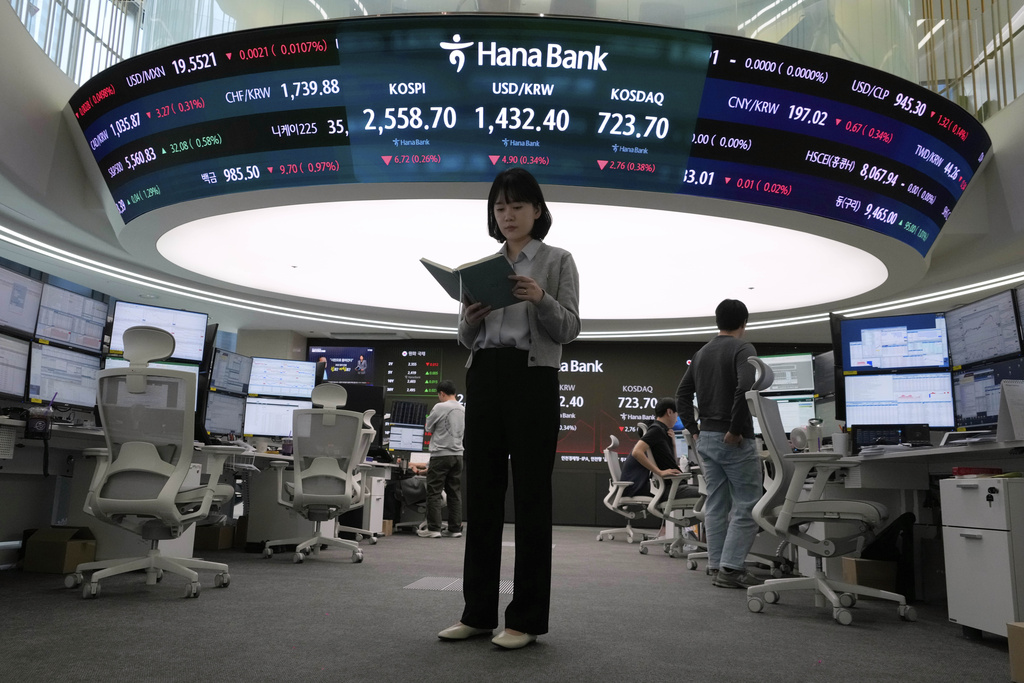
On Wednesday, shares in Asia showed mixed performance following another uptick in U.S. stocks amid better-than-predicted corporate earnings reports.
U.S. futures declined, and oil prices likewise moved down slightly.
Ambiguity surrounding President Donald Trump's trade war restricted advancements in U.S. stock markets. Similarly, a decline in consumer confidence and disappointing data on retail sales contributed to this stagnation. job openings At the close of March, U.S. employers were actively advertising positions.
The Nikkei 225 index in Tokyo rose slightly by 0.1%, reaching 35,871.74.
Even following this development, Japanese automakers' stocks dropped. Trump signed an order relaxing some U.S. tariffs On imported vehicles and automotive components.
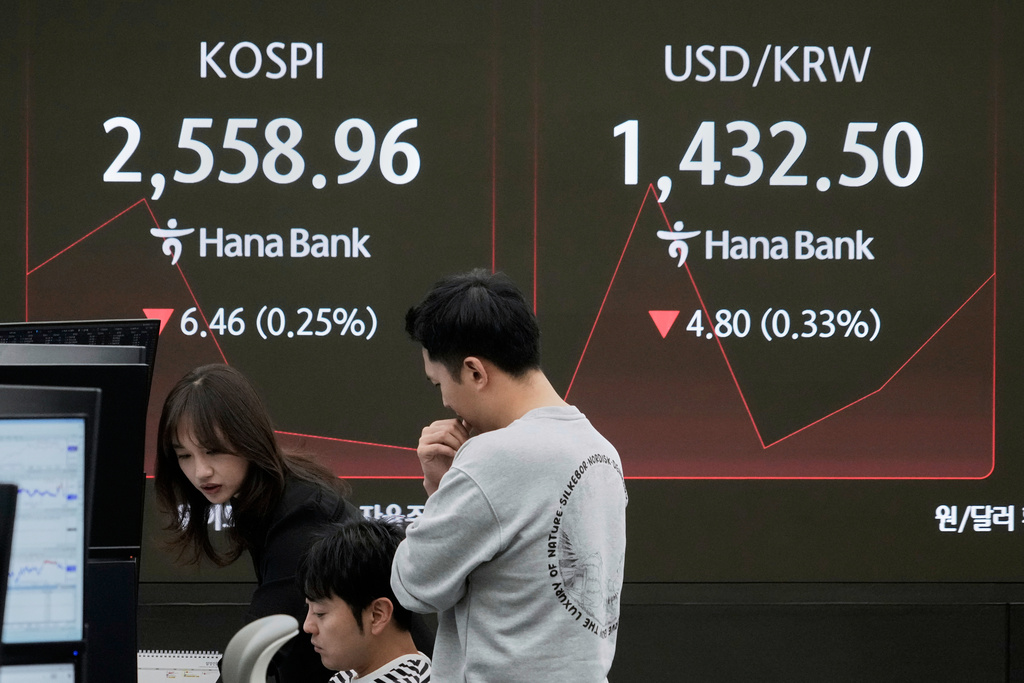
In Hong Kong, the Hang Seng dropped 0.3% to reach 21,941.40, whereas the Shanghai Composite index declined by 0.1% to stand at 3,283.51.
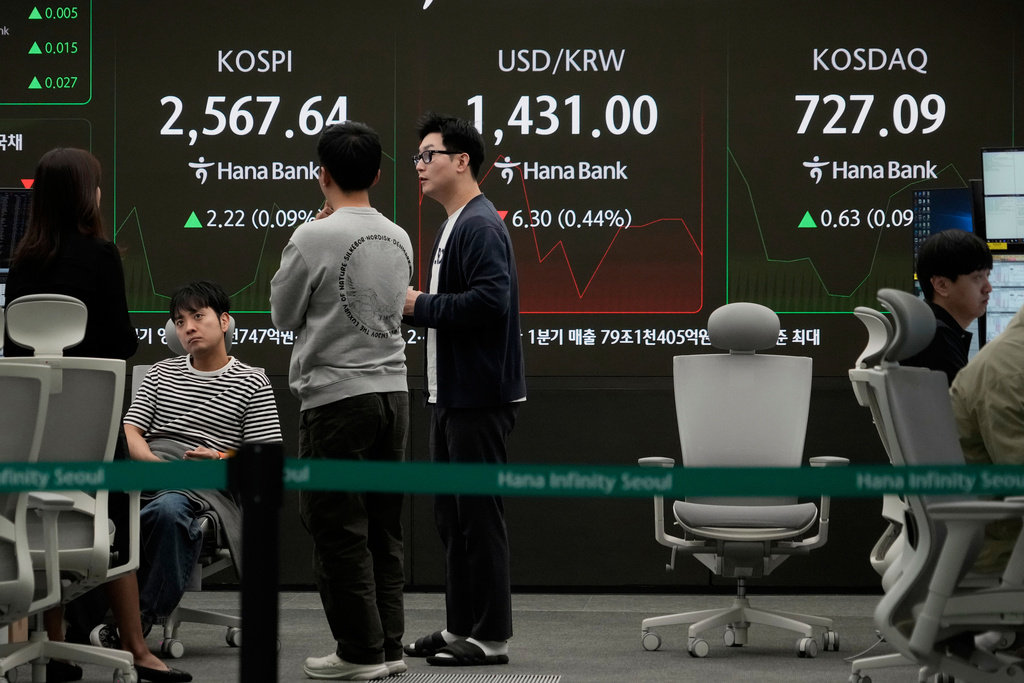
The South Korean Kospi fell by 0.6%, landing at 2,548.88, whereas the S&P/ASX 200 in Australia rose by 0.2%, reaching 8,086.90.
Taiwan's Taiex increased by 0.4%.
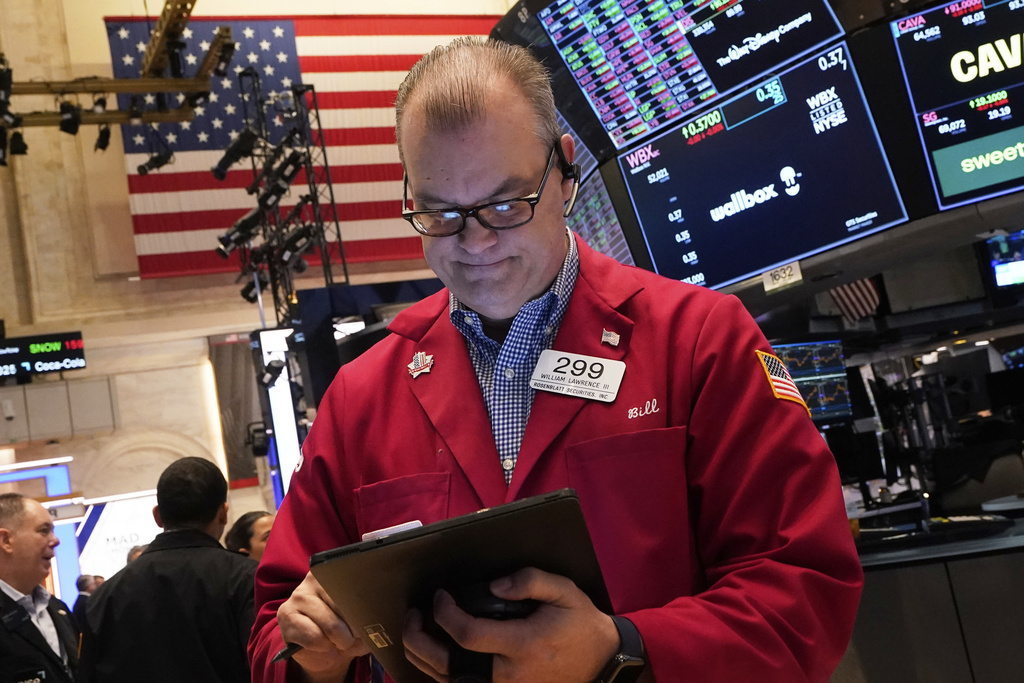
On Tuesday, U.S. equities saw another increase. The S&P 500 went up by 0.6%, reaching 5,560.83, with its consecutive gains continuing for an additional day. sixth day The Dow Jones Industrial Average gained 0.7%, closing at 40,527.62. Meanwhile, the Nasdaq composite climbed 0.5%, finishing at 17,461.32.
CEOs say they’re unsure how long their businesses can continue amassing profits because of the uncertainty surrounding Donald Trump’s trade war .
Honeywell International was at the forefront of market gains, surging by 5.4%, following the announcement of higher profits and revenues for the most recent quarter that exceeded analyst expectations. The company also increased its annual profit projection.
Sherwin-Williams saw an increase of 4.8%, contributing significantly to the day’s major gainers, following its report of profits that exceeded expectations. This was consistent with the performance of the broader markets.
The UPS stock seesawed between declines and increases when trading opened for the day. reported profits higher than what analysts had anticipated For the initial quarter of 2025. Given its status as the globe's biggest package delivery firm, UPS provides insight into the state of the worldwide economy.
However, UPS stated it was not revising its earlier financial predictions for 2025 due to "present economic uncertainties." The company additionally mentioned plans to reduce approximately 20,000 positions and shut down around 73 facilities within the year. As a result, its stock ended slightly lower by 0.4%.
Investors are concerned that Trump’s tariffs might trigger a recession unless modified, as they have the potential to halt worldwide commerce and increase costs across various goods. Additionally, the unpredictable introduction and withdrawal of these policies by Trump can disrupt the extended planning cycles for expenditures and investments made by both companies and families.
U.S. households are getting much more pessimistic Due to tariffs, a report from the Conference Board released on Tuesday indicated that their outlooks for earnings, commerce, and employment scenarios fell to their lowest point since 2011 and remain significantly beneath what typically precedes an economic downturn.
U.S. Treasury Secretary Scott Bessent stated that these economic impacts Uncertainty is a weapon Trump has at his disposal. As he discusses tariffs and trade agreements, "President Trump generates what I'd describe as strategic ambiguity during these talks," he explained to journalists at the White House.
General Motors dropped 0.6% notwithstanding reporting a stronger profit For the recent quarter, the performance exceeded what analysts had anticipated. Due to "lately reported modifications in trade policies," the firm has moved the scheduled conference call with shareholders, aimed at reviewing their outcomes and projecting figures for 2025, to this coming Thursday.
Coca-Cola also overcame an early drop to rise 0.8%. The beverage giant reported better-than-expected earnings in the first quarter and said the impact of tariffs on its business are likely to be “manageable.”
The yields on Treasury notes decreased. Specifically, the rate on the 10-year Treasury slid to 4.17%, down from 4.23% at the close of trading on Monday.
Yields have mostly been declining since an alarming period, unusual spurt higher Earlier this month, both Wall Street and the U.S. government were shaken. This increase indicated that investors globally might be beginning to doubt the reliability of the U.S. bond market as a secure location for their funds.
During other transactions earlier on Wednesday, the U.S. benchmark crude oil dropped 9 cents to settle at $60.33 per barrel. The internationally recognized Brent crude also decreased, losing 6 cents to reach $63.22 per barrel.
The U.S. dollar climbed to 142.39 Japanese yen from 142.35 yen. Meanwhile, the euro dropped to $1.1369 from $1.1386.
___
Stan Choe, an AP Business Writer, provided contributions.
Post a Comment for "Asian Shares Surge Following Wall Street Gains and Soaring Corporate Profits"