Surprisingly, This Generation Leads the Charge Back to Office!
- READ MORE: Jamie Dimon advises younger audience why remote working isn't an option for them
While CEOs struggle to bring employees back into the office following years of remote work, an unexpected group is particularly keen to return.
Generation Z—those born between 1997 and 2012—are at the forefront according to fresh insights from property firm JLL.
The survey revealed that young employees go to the office for approximately 3.1 days each week, whereas older age groups visit between 2.5 to 2.7 days per week.
A lot of Generation Z workers have experienced mostly remote or hybrid working arrangements, as they joined the job market during or following the pandemic.
Leading figures like JPMorgan Chase CEO Jamie Dimon have cautioned that working from home is hindering career progression for younger employees .
The younger cohort is suffering due to this," he stated in an unauthorized audio from a closed gathering. "They are lagging behind in social interactions, exchanging thoughts, and connecting with others.
For Lucy Blitz, a 22-year-old sports marketing agent, the workspace simplifies everything.
'She finds it simpler to discuss issues directly with her colleagues and managers in person rather than using Slack, which she dislikes.' told the Financial Times .

Johnnie Dowd, a strategy analyst who is also 22 years old, mentioned that one of the driving forces behind young employees going into the office is their residence in tiny flats lacking suitable home workspaces.
"I mostly find myself slouching over my laptop, but at the office, I could have a large desk equipped with multiple monitors and enjoy a perfectly controlled climate," Dowd stated.
The younger employee additionally wishes to engage socially and interact. They believe that their twenties should involve more than just staying at home for numerous video calls.
Nevertheless, even though Generation Z was the most eager about going back to the workplace, they still value having flexible options.
The team indicated that they preferred approximately 2.6 days per week working in-person, instead of being present full-time.
Companies are increasingly implementing requirements for employees to be physically present at the office for a certain number of days.
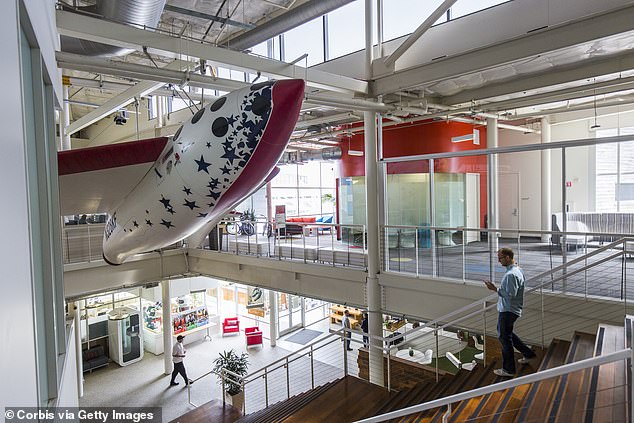
Recently, Google stated that numerous employees who were initially approved for remote work would now be required to go to the office at least three days each week.
If employees fail to adhere, they risk job termination, the firm stated last week.



However, Bryan Berthold, who leads workplace experiences globally at Cushman & Wakefield, told the Financial Times that such mandates can make employees feel untrusted.
"You've spilled the beans—it's similar to moving from high school to college, where nobody monitors you," he clarified.
The requirements feel akin to returning to high school; establishing trust proves difficult.
18 percent of Generation Z participants in a Deloitte poll stated that productivity had declined for them due to employer mandates.
In addition to private companies, the federal government is likewise involved. driving employees back to the workplace .
Numerous studies indicate that workers tend to be more productive, concentrated, and cooperative when they work in-office as opposed to from home, according to a statement made by a White House representative in January.
It ranks among President Trump’s highest objectives to enhance the efficiency of the federal government for the benefit of American taxpayers.
A desire to come back to the workplace could persuade managers that younger employees aren't entirely negative—following recent studies suggesting as much. Companies are letting go of Gen Z employees at an unprecedented rate. .
A survey by Intelligent.com In September, it was discovered that six out of every ten companies had already dismissed some of the college graduates they had initially hired in 2024.
Seven out of every 50 employers stated they could potentially avoid hiring new college graduates in the coming year due to numerous issues encountered with younger employees.
Executives expressed reservations about communication abilities and professionalism among members of Generation Z, making them hesitant to hire individuals from this demographic.
Read more
Post a Comment for "Surprisingly, This Generation Leads the Charge Back to Office!"