Tesla Leads the Way: First Mega Cap Stock to Reclaim 200-Day Average
Tesla has recently achieved a feat unmatched by any of the other seven prominent stocks in 2025. It concluded trading sessions above its 200-day moving average, setting it apart as the sole member of this elite group to regain this technical threshold.
Nevertheless, the rebound occurred after the stock had plummeted approximately 30% for the year so far, and anyone joining this uptick isn’t examining the firm’s figures. The statistics appear even bleaker than before.
Redburn Atlantic suggests that Tesla shareholders should consider selling their shares. The company advised clients on Tuesday to offload their stocks, citing expectations of a challenging year with declining sales and reduced cash flow.
Adrian Yanoshik, an analyst at Redburn, stated in a report that "the difficult profit forecast we have includes challenges such as lower EV prices and tariff issues between Mexico-US and China-Europe." He mentioned that the company anticipates profits and free cash flow will be approximately 10% less than what analysts predict on Wall Street.
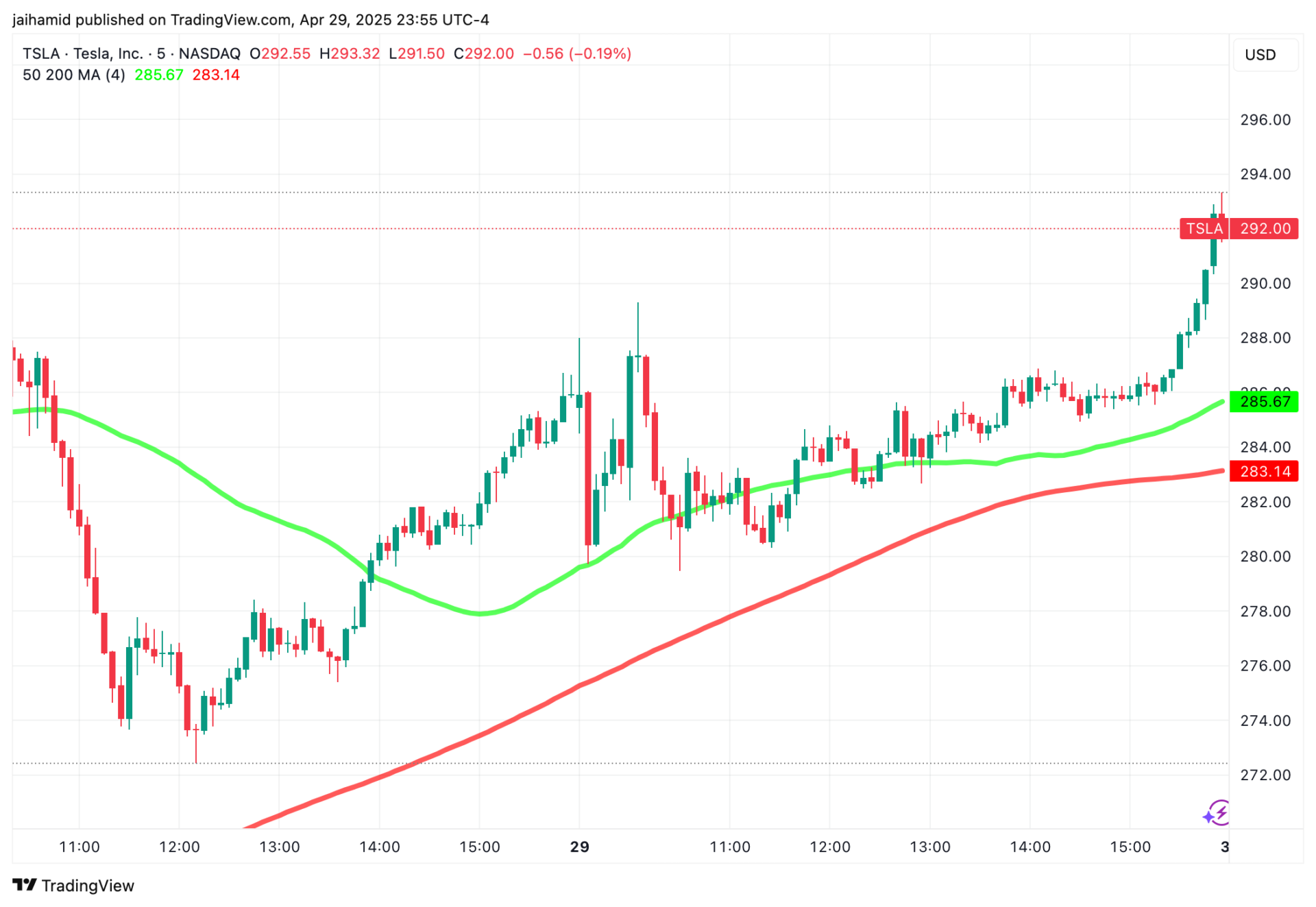
Redburn anticipates further declines due to growing concerns over electric vehicles.
Yanoshik didn't halt his concerns at that point. He also highlighted potential dangers originating from Washington. saying:
“We note even further risks for downgrades associated with a possible rescinding of US Inflation Reduction Act (IRA) clean vehicle credits.”
Should those federal incentives vanish, Tesla purchasers might forfeit a significant discount, potentially dampening the fragile consumer interest even further. Redburn suggests aiming for a share price of $160, indicating a potential decline of approximately 44% from Tuesday’s closing value of $285.88.
This sets a strict limit on the optimism that drove the share price up by 18% following dismal financial results. Investors seem to be treating this stock as though it were trivial. The movement isn’t based on actual performance; rather, it’s driven by hopeful speculation.
Yanoshik also mentioned that the updated Model Y, which began deliveries in March, won't bring significant changes. "Even though it aims to boost sales, we anticipate only a minor increase in overall volume," he stated.
A more affordable version is set to launch in June, but the company has yet to reveal it, christen it, or detail how it will differ from its predecessor. All that’s confirmed at this point is its existence. This approach seems more like keeping a spot open rather than having a clear strategy.
The real performance figures are poor. In the last four years, Tesla has underperformed the S&P 500 by 15 percentage points. shareholders have faced significant losses due to substantial fluctuations in the stock price.
Nothing substantial has emerged from the company since the launch of the Model Y SUV back in 2019, marking their most recent significant product introduction. There hasn’t been genuine innovation for over half a decade now.
Tesla stock remains wildly overpriced as investors ignore the numbers
Let’s discuss valuation. According to S&P Capital IQ, Tesla’s price-to-earnings ratio stands at 164x. This indicates that investors are paying $164 per share for every dollar of the company’s earnings. Additionally, the price-to-sales ratio is 9.51x, suggesting that the stock may be significantly overpriced.
Most established firms typically have valuations ranging from about 2 times to 3 times their revenues. If you're investing close to $10 for each dollar of revenue, you must be confident that the firm will significantly expand its operations—ideally tripling them. However, Tesla doesn’t appear to demonstrate any indications of potential growth whatsoever.
Once, the former CEO of Sun Microsystems, Scott McNealy, stated, "If we're valued at ten times our revenue, to get a payoff within ten years, I would need to distribute all the revenue as dividends for ten consecutive years." He then posed the crucial question: "What were you thinking?" The calculations haven't altered; investors simply aren't paying attention to them.
The aspirations people are purchasing aren't related to vehicles. As explained by Vitaliy Katsenelson, a Denver-based investment manager, Tesla's $900 billion market capitalization includes only $100 to $180 billion derived from their automotive operations.
What remains? It's all linked to concepts that Elon Musk has proposed, such as robot taxis, robots, and autonomous driving technology—none of which have evolved into established enterprises yet. Investors are essentially betting on possibilities that haven't materialized.
Despite being in beta for an extended period, the Full-Self-Driving software remains incomplete. The timeline for its functionality is uncertain, with no clear end date. Additionally, the Tesla board lacks sufficient independence to question progress or push back on deadlines; they merely observe developments passively.
Before the 2024 election, the company already had real problems. Traditional automakers were pushing out better EVs, and charging was still a nightmare for customers.
Range anxiety persists. Both the Model 3 and Model Y have been around for more than half a decade now. The Cybertruck is excessively priced and seems poorly constructed. Full-Self- Driving capabilities are nearly non-existent. As for robots? It appears only Musk believes they will be a reality soon.
Romero.my.id Academy: Fed up with market fluctuations? Discover how DeFi can assist you in generating consistent passive income. Register Now
Post a Comment for "Tesla Leads the Way: First Mega Cap Stock to Reclaim 200-Day Average"